Hormone Therapy Tailored to You
The Gradual Shift: What Your Hormones Might Be Telling You
You wake up tired after a full night of rest. The gym stopped paying off the way it used to. You’re short with people you love for reasons you can’t quite explain. None of it is dramatic enough to alarm anyone, but something has shifted.
Some weeks, you almost feel normal. Then sleep goes sideways again, or your patience runs out earlier than it should, and you’re back to wondering whether this is just what getting older actually feels like. At Pure by Alpha Dermatology, we offer a real answer.
That experience is more common than most people realize. And for many, it has a specific source: hormonal imbalance. Understanding what’s happening in your body and what you can do about it starts with knowing what to look for. For patients exploring HRT in Bucks County, that first step begins with connecting what you feel each day to what your body may be missing.
Why Hormones Change
Hormones regulate our bodies more than most people realize. They influence:
- Energy production
- Sleep quality
- Metabolism
- Mood
- Cognitive function
- Libido
- How your body responds to food and exercise
Hormones touch almost every single part of your life. When levels are balanced, these systems tend to operate without drawing much attention. When they fluctuate, the effects are felt everywhere.
Because hormones work as a network rather than in isolation, an imbalance in one area often creates a ripple effect across others. The result is a collection of hard-to-recognize symptoms that can feel confusing, disconnected, or easy to rationalize.
For women, the most common driver is the transition into perimenopause and menopause, a process that often begins years before periods stop. Estrogen and progesterone decline, producing a wide range of symptoms that aren’t always immediately connected to hormones.
For men, testosterone declines at roughly 1% per year beginning in the mid-thirties. The changes are gradual enough that many men attribute the effects to stress, poor sleep, or simply getting older. Those explanations are only part of the picture.
That’s why patients seeking HRT in Bucks County span all genders and a wide range of ages. Not just those in the middle of menopause, but anyone whose hormones no longer support how they want to feel and function.
What Hormonal Imbalance Actually Looks Like
Hormonal shifts typically show up as patterns that are easy to attribute to stress, age, or a rough stretch. That is, until they don’t resolve.
Energy and Sleep
Fatigue that sleep doesn’t fix is one of the earliest and most persistent signs. You put in eight hours and wake up feeling like you didn’t. Afternoon crashes stop being occasional and start feeling expected.
Cognitive Changes
Brain fog can slow recall, cause difficulty concentrating, and create a delay in thinking. It tends to develop gradually enough that patients attribute it to stress or getting older before they consider hormones.
Mood and Irritability
Irritability that feels disproportionate to the cause, emotional flatness, or low-level anxiety in daily life are frequently connected to hormone fluctuations rather than what’s actually happening around you.
This can be one of the more isolating signs because it changes how you move through the day. You may still be functioning, but with less patience than you used to have. For many people researching HRT in Bucks County, their concern is not one bad mood or one stressful week. It is the pattern of feeling less steady, less present, or less like yourself.
Body Composition
Hormones directly influence how the body stores fat, builds muscle, and responds to exercise. When levels are off, the scale stops responding, muscle is harder to build and easier to lose, and fat often redistributes.
Libido and Sexual Health
Reduced desire and arousal or discomfort during intimacy are common in both men and women. They’re often left unaddressed because patients assume these changes are inevitable. But, they’re not.
Hair Thinning
Hair may shed more than usual or feel noticeably thinner, often at the part line or temples. In women, this surfaces in the early stages of perimenopause.
When HRT Becomes the Treatment Plan
The challenge with hormonal imbalance is that its symptoms overlap with other conditions, like thyroid changes, nutritional deficiencies, sleep disorders, and mood conditions. That’s exactly why self-diagnosing rarely resolves the problem.
How HRT Works at Pure by Alpha
Care begins with comprehensive lab testing to establish your hormonal baseline. Your provider reviews the data alongside your symptom history and health factors to build a personalized plan for which hormones to address, at what levels, and through which delivery method.
At Pure by Alpha Dermatology, HRT in Bucks County is administered through in-office injections. This approach supports precise, consistent dosing at each appointment.
Regular follow-ups include updated labs and symptom check-ins, with the hormone dosage adjusted as your body responds. Your provider personalizes treatment based on what your labs show and how you want to feel.
The therapy types available include:
Bioidentical Hormones
Bioidentical hormones are structurally identical to the hormones your body produces naturally. Because they mirror your own hormone chemistry, they are often well-tolerated and allow for individualized dosing based on your lab data.
Testosterone Therapy
Testosterone therapy can support both men and women. In men, it addresses the gradual decline that affects energy, muscle mass, libido, and mental sharpness. In women, low testosterone often contributes to fatigue, lack of motivation, and diminished libido.
Estrogen Therapy
Estrogen therapy is most commonly used in women navigating the symptoms of perimenopause or menopause, like hot flashes, night sweats, sleep disruption, mood variability, and vaginal discomfort.
Progesterone Therapy
Progesterone is often prescribed alongside estrogen, providing hormonal balance for women. On its own, progesterone also supports sleep quality and can help reduce anxiety. Your provider determines whether progesterone is appropriate based on your health history, current symptoms, and lab results.
HRT as Part of the Pure Longevity Program
At Pure by Alpha, hormone therapy sits within the broader Pure longevity program. This program also includes weight management support, body composition analysis through InBody scanning, and medicine, as needed. Each addresses what HRT alone doesn’t fully resolve.
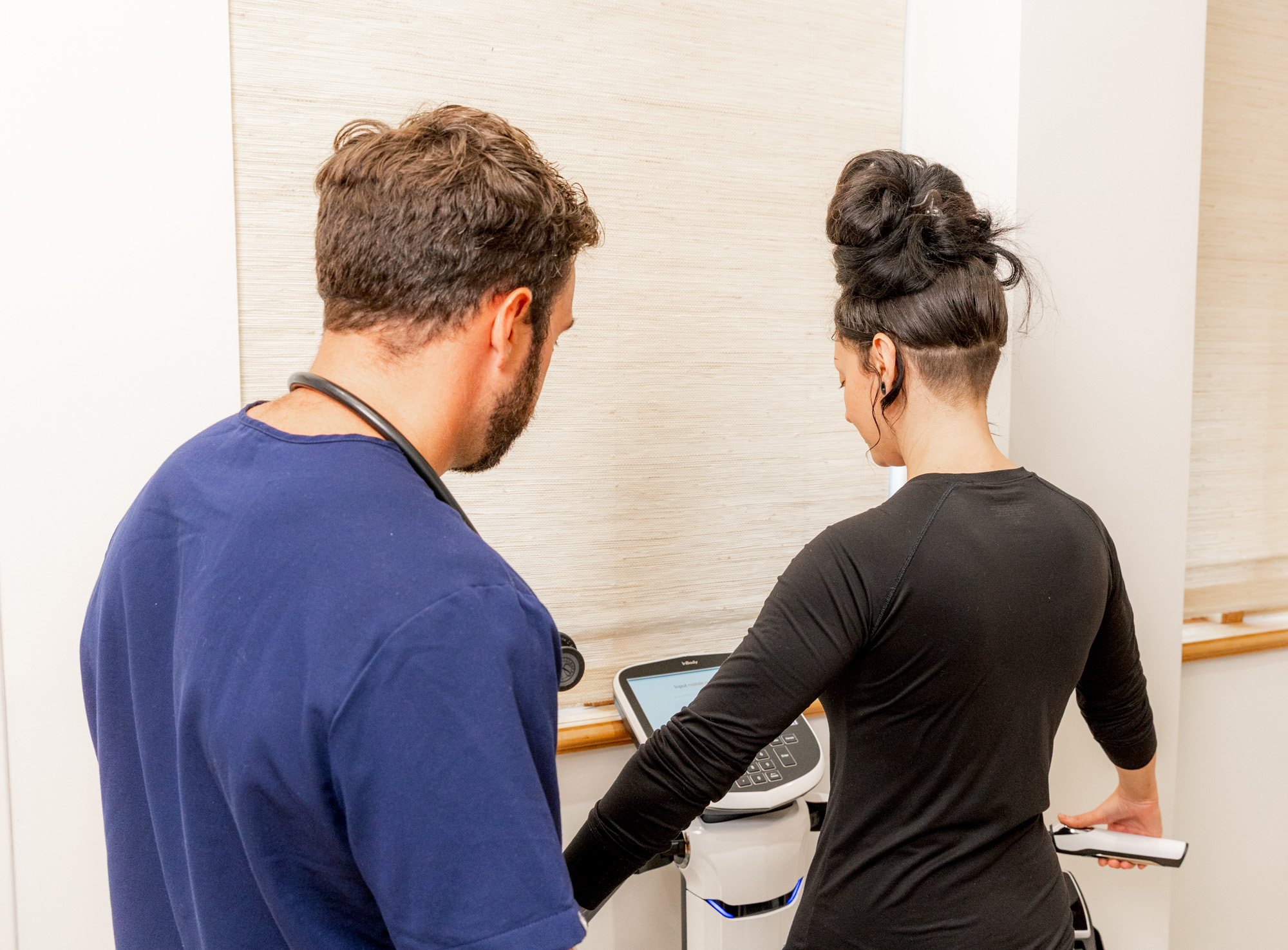
The InBody scan is one service where that integration becomes concrete. It measures muscle mass, fat distribution, and metabolic markers directly. This gives your provider data that tracks how your body changes as hormone levels shift, not just a subjective read on how you feel week to week.
Weight management support matters because hormonal imbalance and metabolic resistance frequently overlap. Getting HRT in Bucks County at Pure by Alpha Dermatology can reduce some of those barriers, but a coordinated plan addresses metabolism directly.
When your team is consistent and works from the same labs, your care plan adjusts as a whole rather than in disconnected parts. That’s the practical value of care that’s built to work together.
Start Your Journey With Confidence
That question you’ve been sitting with—whether this is just what getting older feels like—is worth answering.